
Verleger: Zenva Academy
Zenva Academy
Effective certification preparation depends on more than reading technical material; it also requires repeated practice, honest self-assessment, and familiarity with the exam experience. This collection gives readers a structured way to test their readiness for AI-200 and understand how well they can apply the knowledge expected by Microsoft.The opening sections explain exam details, question coverage, prerequisites, setup, and a practical method for taking each test. Readers then work through ten complete practice exams, reviewing an answer key after every attempt. This format supports a steady cycle of testing, checking, and revisiting weak areas rather than relying on passive review.Across repeated attempts, readers can improve recall, spot patterns in missed questions, manage time more deliberately, and build confidence under exam-style conditions. By the end of this book, they will have a clearer view of their strengths, a focused plan for final study, and greater readiness to sit the AI-200 exam.
101 Claude Code Tips. A Battle-Tested Field Guide for Agentic Coding
Zenva Academy
Effective agentic coding begins with a dependable working environment and clear project guidance. The opening sections show how installation choices, environment settings, CLAUDE.md files, slash commands, and reusable skills can reduce friction while giving Claude Code precise boundaries. The focus stays on choices that improve everyday work rather than abstract features.The middle of the journey moves into planning, specifications, verification, hooks, MCP servers, subagents, and browser automation. Readers see how to separate exploration from execution, assign tools by role, protect risky actions, check outputs against real evidence, and package repeatable processes. Guidance on content quality, citations, reporting, sessions, context, and cost connects technical practice with trustworthy delivery.By the end of this guide, readers can shape Claude Code into a more disciplined development partner. They will be ready to combine speed with review, use automation without surrendering judgment, and avoid common habits that create fragile or misleading results.
Best Practices for Claude Code. Advanced Agentic Coding for Real-World Codebases
Zenva Academy
Reliable AI-assisted development depends on more than a well-worded prompt. The opening material frames prompting as engineering communication, showing how constraints, guardrails, project context, and human control shape the quality of a result. Readers prepare a working environment, review prerequisites, and learn why clear boundaries matter before any code is changed.The central sections use CLAUDE.md, architecture maps, scratchpads, and planning documents to make intent visible. Readers follow server and client concerns, record open decisions, define planned file changes, inspect a running application, and test generated features. The emphasis is on small, reviewable modifications that respect existing design rather than broad rewrites driven by vague instructions.By the end of this guide, readers can direct Claude Code with greater precision and assess its work with informed judgment. They will know how to limit scope, verify behavior, manage context drift, and establish repeatable practices for safer maintenance over time.
Claude Code Automation. MCP, Skills, and Production Agentic Workflows
Zenva Academy
Useful automation starts with a clear model of what the agent may do, what each tool provides, and where human approval belongs. The opening sections establish project guidance, working memory, planning, and scope controls before introducing the Model Context Protocol. Readers learn how MCP servers expose capabilities through defined tool contracts and why those contracts matter for safe execution.The practical work connects Claude Code to external systems. Readers configure MCP connections, inspect available tools, prepare a local repository, create a GitHub access token, and move through branch, commit, push, and pull-request-oriented tasks. Browser investigation with Playwright adds another layer, showing how an agent can inspect a web application while staying within explicit goals and observable checks.By the end of this guide, readers can design connected workflows rather than isolated prompts. They will be able to combine repository operations, browser automation, and project-level skills into repeatable processes that remain understandable, guarded, and easier to verify.
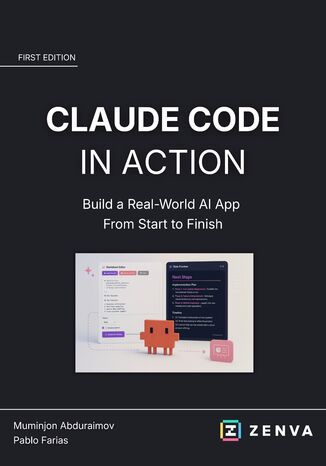
Claude Code in Action. Build a Real-World AI App From Start to Finish
Zenva Academy
Hands-on agentic development becomes clearer when every concept supports a working application. The opening sections prepare Node.js, Claude Code, required accounts, and project files, then introduce the shift from a coding assistant to an active development partner. Readers define the application, organize its core components, and translate frontend, backend, export, and error-handling needs into focused requests.The build then moves from generation to evidence-based troubleshooting. Readers install dependencies, run the application, diagnose the first failures, repair client-server communication, and investigate HTML and JSON exports. Additional work adds a presentation mode and compares hosted and local model providers through OpenAI and Ollama, including configuration and timeout problems that reveal how environment details affect behavior.By the end of this guide, readers can take an AI-assisted application from idea to a tested local result. They will be prepared to prompt with clearer intent, inspect generated code, resolve integration faults, and improve interface details through deliberate iteration.
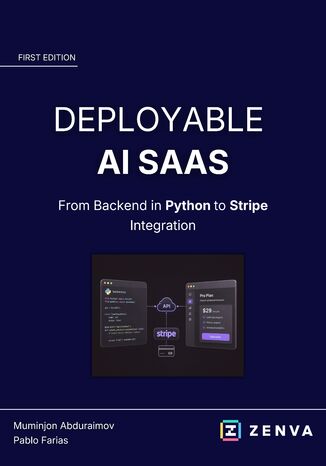
Deployable AI SaaS. From Backend in Python to Stripe Integration
Zenva Academy
A dependable AI SaaS product needs more than a model endpoint. The first unit establishes a FastAPI backend with configuration, database models, users, API keys, credits, JWT access tokens, authentication middleware, and protected routes. Readers see how account data, credential checks, authorization failures, and service logic fit together as a coherent application foundation.The next stage extends those services into frontend experiences for registration, login, account management, API keys, and credit balances. Testing connects the client and server before billing work begins. Stripe integration then introduces products, prices, checkout, payment records, event verification, webhooks, and billing pages, with attention to how data moves through the complete user flow.By the end of this guide, readers can assemble and test the core systems behind an AI SaaS application. They will understand how authentication, usage credits, protected APIs, payments, database checks, and frontend interactions work together to support a more deployable product.
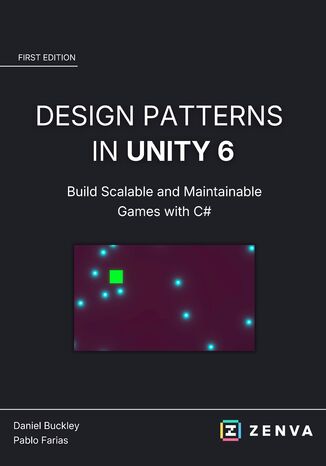
Design Patterns in Unity 6. Build Scalable and Maintainable Games with C#
Zenva Academy
Growing Unity projects can become difficult to extend when systems depend too heavily on one another. The opening material explains SOLID principles and shows how coupling affects readability, testing, and maintenance, giving readers a practical basis for choosing better structures.The journey then refactors real Unity 6 systems with C#. A generic Singleton centralizes shared access, the Observer pattern uses events to separate communication, and the Command pattern turns actions into flexible, extensible objects. Object Pooling is introduced through a shooter example, connecting reusable instances with measurable runtime benefits.By the end of this guide, readers can recognize where these patterns fit and implement them without adding unnecessary complexity. Complete project files and source code support further experimentation with scalable, maintainable game architecture.
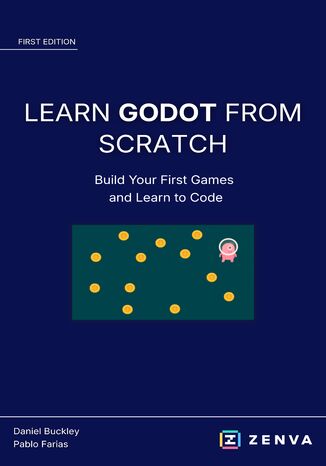
Learn Godot From Scratch. Build Your First Games and Learn to Code
Zenva Academy
Starting game development is easier when the engine and code are introduced in a clear sequence. The opening material guides complete beginners through installing Godot 4.6, navigating the editor, and understanding nodes, scenes, hierarchies, and transforms without assuming prior experience.Practical work then moves into 3D space, materials, lighting, cameras, and viewports before introducing GDScript. Readers use variables, data types, operators, conditions, functions, and vectors to create a responsive player controller and a collectible coin, linking programming ideas to visible game behavior.By the end of this guide, readers can assemble, polish, and export a working 3D project. Downloadable project files and full source code provide a dependable reference for continued practice and more ambitious Godot games.
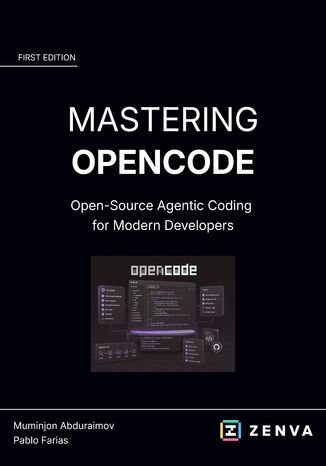
Mastering OpenCode. Open-Source Agentic Coding for Modern Developers
Zenva Academy
Open-source agentic coding offers flexibility, but useful results depend on accurate context and deliberate control. The opening material introduces OpenCode across terminal, editor, and desktop environments, then connects cloud, built-in, or local model providers to a fresh installation.Readers explore an unfamiliar codebase with /init, AGENTS.md, and fuzzy file search before separating analysis from modification through Build and Plan agents. Permissions in opencode.json establish safer boundaries, while focused instructions keep outputs grounded in the project. A coding challenge brings planning and implementation together in one practical workflow.By the end of this guide, readers can steer OpenCode without surrendering judgment or privacy. Starter assets and completed project files support continued work across different models, repositories, and offline development settings.
Zenva Academy
Modern AI applications rely on far more than a model endpoint. They need secure deployment, resilient data layers, event-driven integration, careful configuration, and clear operational insight. This guide frames those demands through the Microsoft Azure services measured by AI-200, helping readers connect exam objectives with the decisions cloud developers face when building production-ready solutions.The journey starts with container images, ACR tasks, App Service, Container Apps, KEDA, and AKS, then moves into Cosmos DB, PostgreSQL, pgvector, Redis, and retrieval-augmented generation patterns. It continues through Service Bus, Event Grid, Azure Functions, Key Vault, App Configuration, OpenTelemetry, Azure Monitor, Application Insights, and KQL, with scenarios, reviews, and exam tips that clarify how the pieces work together.Readers finish with a practical view of how to choose services, secure identities and secrets, manage scale, design vector search, handle messages, deploy serverless APIs, and investigate logs and traces. By the end of this book, they can approach AI-200 questions with stronger judgment and apply the same reasoning to Azure development work.
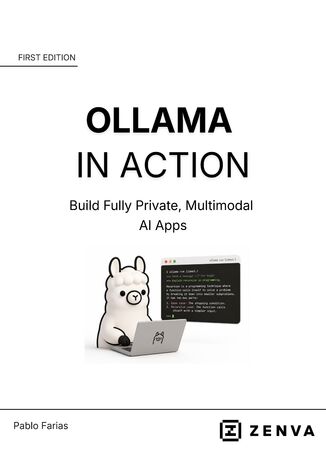
Ollama in Action. Build Fully Private, Multimodal Al Apps
Zenva Academy
Local AI can improve privacy and reduce reliance on cloud inference, but hardware and performance constraints require informed choices. The opening material explains these trade-offs and guides installation on macOS, Windows, or WSL, followed by the commands used to pull, run, list, switch, and remove models.The practical journey connects Ollama to Python and moves beyond simple prompts. Readers send images to a multimodal model, build a chatbot that retains conversation history, and create an application that scans image folders and records structured catalog details in CSV format. Model selection remains tied to available hardware and expected speed.By the end of this guide, readers can manage a local model library and build useful private AI applications. Complete project files make it easier to adapt the chatbot and multimodal workflow to personal experiments or new Python projects.
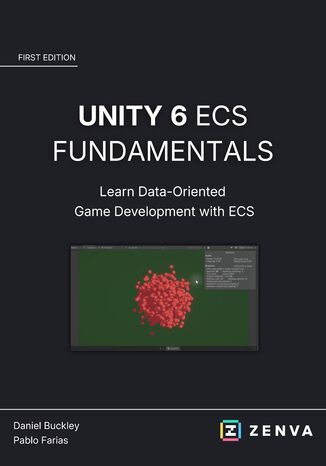
Unity 6 ECS Fundamentals. Learn Data-Oriented Game Development with ECS
Zenva Academy
Data-oriented design changes how gameplay data and behavior are organized when projects must process many objects efficiently. The opening material explains ECS foundations and guides readers through package installation, Play Mode configuration, entities, custom components, authoring scripts, and bakers in Unity 6.3 LTS.The next stage turns those building blocks into working systems. Readers move entities with the Unity Job System, enable Burst compilation, and create a spawner that scales to thousands of entities. Unity's Entity windows provide visibility into the simulation, connecting high-performance execution with practical inspection and debugging.By the end of this guide, readers can build and control an ECS-based gameplay flow, including a data-oriented player controller. Complete project files and C# source code support further experiments with scalable systems and performance-focused Unity development.
Unity 6 Game Optimization. Improve Performance and Create Smoother Gameplay
Zenva Academy
Reliable optimization starts with evidence rather than guesswork. The opening material shows how common Unity problems affect frame rate, then establishes a baseline and uses the Profiler and Frame Debugger to reveal where processing and rendering time are being spent in Unity 6.3 LTS.Readers then address the bottlenecks that matter. Static batching reduces draw calls, lighting work compares real-time and baked options, and Level of Detail and occlusion culling prevent unnecessary rendering. Every change is tied back to measurement so improvements can be confirmed instead of assumed.By the end of this guide, readers can move from diagnosis through implementation and validation in a repeatable optimization workflow. A hands-on challenge, complete Unity project files, and full C# source code provide a practical foundation for improving performance in their own games.