
Publisher: M-t
Eden Marco
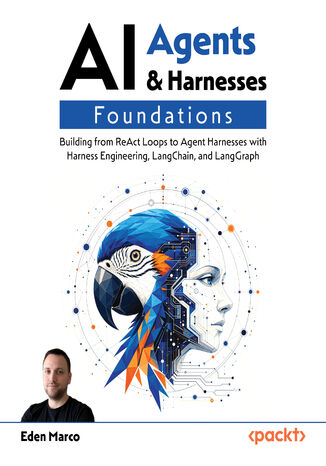
AI Agents & Harnesses Foundations shows you how to build the AI agents and agent harnesses powering modern agentic AI applications. You’ll start with LangChain’s core primitives, including models, messages, prompts, tools, and structured outputs, and use them to build increasingly capable agents. From there, you’ll go under the hood to understand the agent loop, tool-calling LLMs, state, memory, context engineering, orchestration, and long-horizon agents. Using LangChain, LangGraph, and LangSmith, you’ll see how modern agent systems are built, orchestrated, traced, and observed. By the end, you’ll understand modern agent harness architecture and have the practical foundations to build, debug, secure, and evolve reliable production AI agents.
AI Agents in Practice. Design, implement, and scale autonomous AI systems for production
Valentina Alto
As AI agents evolve to take on complex tasks and operate autonomously, you need to learn how to build these next-generation systems. Author Valentina Alto brings practical, industry-grounded expertise in AI Agents in Practice to help you go beyond simple chatbots and create AI agents that plan, reason, collaborate, and solve real-world problems using large language models (LLMs) and the latest open-source frameworks.In this book, you'll get a comparative tour of leading AI agent frameworks such as LangChain and LangGraph, covering each tool's strengths, ideal use cases, and how to apply them in real-world projects. Through step-by-step examples, you’ll learn how to construct single-agent and multi-agent architectures using proven design patterns to orchestrate AI agents working together. Case studies across industries will show you how AI agents drive value in real-world scenarios, while guidance on responsible AI will help you implement ethical guardrails from day one. The chapters also set the stage with a brief history of AI agents, from early rule-based systems to today's LLM-driven autonomous agents, so you understand how we got here and where the field is headed.By the end of this book, you'll have the practical skills, design insights, and ethical foresight to build and deploy AI agents that truly make an impact.
AI Agents on AWS. Beginner's guide to building AI agents on AWS
Bunny Kaushik, Mona M, Randy DeFauw
Build reliable AI agents on AWS and move beyond prototypes with practical guidance. This book helps you design, deploy, and manage agentic systems that reason, use tools, and collaborate to solve real-world tasks.You start with the foundations of agentic AI, understanding how agents think, act, and interact. Design single-agent systems, extend them with tool and function calling, and add memory for context-aware behavior using Amazon Bedrock and SageMaker AI. You will also use LangGraph and Strands to structure agent workflows.As you progress, create multi-agent systems and orchestrate workflows where specialized agents collaborate. Learn how MCP and A2A enable communication, interoperability, and modular design across agent ecosystems.Focus on production readiness by deploying and scaling agents with Bedrock AgentCore, evaluating performance, and implementing observability, monitoring, and governance. By the end, you will be able to design and operate robust AI agent systems on AWS.
Paul Browne (GBP), ALEX PORCELLI
Microsoft Excel is widely adopted across diverse industries, but Excel Power Users often encounter limitations such as complex formulas, obscure business knowledge, and errors from using outdated sheets. They need a better enterprise-level solution, and this book introduces Business rules combined with the power of AI to tackle the limitations of Excel.This guide will give you a roadmap to link KIE (an industry-standard open-source application) to Microsoft’s business process automation tools, such as Power Automate, Power Query, Office Script, Forms, VBA, Script Lab, and GitHub. You’ll dive into the graphical Decision Modeling standard including decision tables, FEEL expressions, and advanced business rule editing and testing.By the end of the book, you’ll be able to share your business knowledge as graphical models, deploy and execute these models in the cloud (with Azure and OpenShift), link them back to Excel, and then execute them as an end-to-end solution removing human intervention. You’ll be equipped to solve your Excel queries and start using the next generation of Microsoft Office tools.
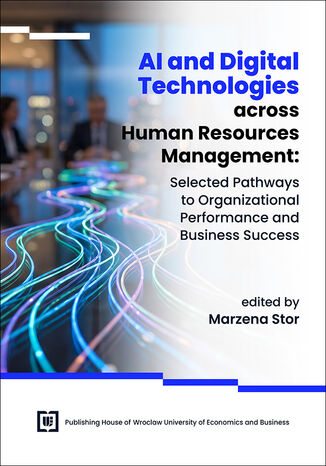
Marzena Stor red.
Artificial intelligence and digital technologies are no longer merely tools that support human resources management (HRM). They increasingly shape its architecture and decision-making processes, as well as the ways organizations attract, develop, and engage employees. The monograph AI and Digital Technologies across Human Resources Management: Selected Pathways to Organizational Performance and Business Success offers a multidimensional perspective on this transformation across varied organizational contexts, including a university, domestic companies, and multinational companies. The authors examine the application of AI and digital technologies in strategic HRM, managerial staff development, knowledge transfer, recruitment, selection, preboarding, competency management, and career management. They also address intellectual capital, employee creativity in Metaverse environments, and pay transparency. The publication combines conceptual analyses with empirical research findings, demonstrating how advanced technologies can contribute to organizational performance and business success. It also identifies the conditions required for their responsible use, with due regard for transparency, accessibility, and human agency. Keywords: artificial intelligence, digital technologies, human resources managemen, strategic HRM, digital transformation, employee development, organizational performance, business success.
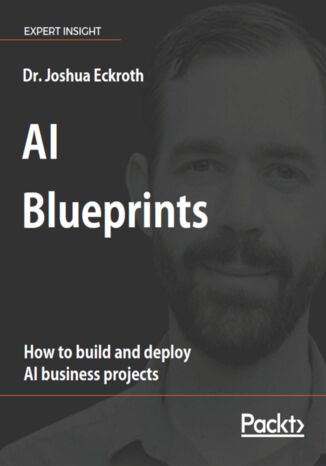
AI Blueprints. How to build and deploy AI business projects
Dr. Joshua Eckroth
AI Blueprints gives you a working framework and the techniques to build your own successful AI business applications. You’ll learn across six business scenarios how AI can solve critical challenges with state-of-the-art AI software libraries and a well thought out workflow. Along the way you’ll discover the practical techniques to build AI business applications from first design to full coding and deployment.The AI blueprints in this book solve key business scenarios. The first blueprint uses AI to find solutions for building plans for cloud computing that are on-time and under budget. The second blueprint involves an AI system that continuously monitors social media to gauge public feeling about a topic of interest - such as self-driving cars. You’ll learn how to approach AI business problems and apply blueprints that can ensure success.The next AI scenario shows you how to approach the problem of creating a recommendation engine and monitoring how those recommendations perform. The fourth blueprint shows you how to use deep learning to find your business logo in social media photos and assess how people interact with your products. Learn the practical techniques involved and how to apply these blueprints intelligently. The fifth blueprint is about how to best design a ‘trending now’ section on your website, much like the one we know from Twitter. The sixth blueprint shows how to create helpful chatbots so that an AI system can understand customers’ questions and answer them with relevant responses.This book continuously demonstrates a working framework and strategy for building AI business applications. Along the way, you’ll also learn how to prepare for future advances in AI. You’ll gain a workflow and a toolbox of patterns and techniques so that you can create your own smart code.
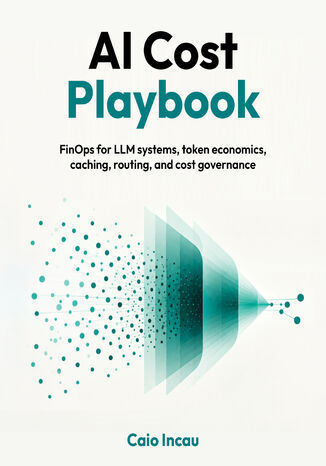
AI Cost Playbook. FinOps for LLM systems, token economics, caching, routing, and cost governance
Caio Incau
LLM applications introduce a new kind of cloud economics. Costs are usage-based, model-dependent, and influenced by everything from prompt length and caching to RAG pipelines and autonomous agent loops. As grows, engineering teams need more than isolated cost-cutting tricks; they need FinOps for LLM systems.The AI Cost Playbook shows you how to apply financial accountability and engineering discipline to production AI. You’ll build tokenwatch, a Python-based cost observability and optimization toolkit, while learning to meter tokens, attribute spend, and calculate costs per request, user, and feature.You’ll then reduce unnecessary spend through prompt optimization, caching, batch processing, model routing and cascades, RAG optimization, and agent cost controls. You’ll also evaluate the break-even economics of self-hosting and learn how to forecast future AI expenditure.Finally, you’ll turn optimization into an operating discipline by establishing budgets, quotas, forecasting, and cost accountability. With configurable pricing rather than hardcoded model costs, the techniques remain useful as providers, models, and pricing evolve.
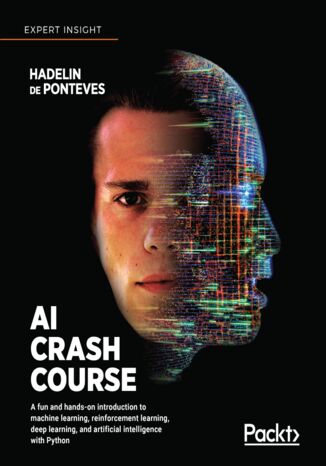
Hadelin de Ponteves
Welcome to the Robot World … and start building intelligent software now!Through his best-selling video courses, Hadelin de Ponteves has taught hundreds of thousands of people to write AI software. Now, for the first time, his hands-on, energetic approach is available as a book. Starting with the basics before easing you into more complicated formulas and notation, AI Crash Course gives you everything you need to build AI systems with reinforcement learning and deep learning. Five full working projects put the ideas into action, showing step-by-step how to build intelligent software using the best and easiest tools for AI programming, including Python, TensorFlow, Keras, and PyTorch.AI Crash Course teaches everyone to build an AI to work in their applications. Once you've read this book, you're only limited by your imagination.