
Publisher: M-t

seria z Rutą Rosieńską (#1). Czerwona nić
Agnieszka Jeż
Jedna nić. Dwa dzieciństwa. Trzydzieści lat milczenia W latach dziewięćdziesiątych w Foluszu zamordowano dwoje dzieci. Z miejsca zbrodni zniknął sandał dziewczynki, obok chłopca leżała piłeczka. Mordercy nigdy nie złapano. Trzy dekady później na Suwalszczyznę przyjeżdża Ruta policjantka, która po przerwie wraca do służby. Chce odpocząć od przeszłości i zamieszkać na tych terenach. Na strychu jednego z domów znajduje pudełko, a w nim dziewczęcy but przewiązany czerwoną nitką. Wraz z młodym posterunkowym odkrywa historię, którą pamiętały już tylko zakurzone akta. Rozpoczynające się śledztwo sięga dalej, niż ktokolwiek mógł przypuszczać w głąb lasu, w ludzkie milczenie, w winę sprzed lat. A to, co miało chronić, staje się dowodem.

seria z Rutą Rosieńską (#2). Czerwona woda
Agnieszka Jeż
Opowieść o micie, który ożywa, i prawdzie, której nie da się zatopić. Gdy milkną piły, woda w Szurpiłach barwi się na czerwono, a pszczelarz Antanas znajduje martwy rój nad brzegiem. Wyłowione z jeziora pocięte ludzkie ciało to dopiero początek makabrycznych odkryć. Aspirant Ruta Rosieńska rozpoczyna śledztwo, w którym tropy prowadzą od opuszczonego ula, przez skrytkę na suwalskim dworcu aż do przydrożnego krzyża w Widugierach. Aby odkryć, dlaczego jezioro spłynęło krwią, Ruta musi się zmierzyć nie tylko z bezwzględnymi mordercami, ale również ze zmową milczenia i tajemnicą własnego pochodzenia. Czerwona woda. Legenda, która przesiąkła krwią.

seria z Rutą Rosieńską (#2). Czerwona woda
Agnieszka Jeż
Opowieść o micie, który ożywa, i prawdzie, której nie da się zatopić. Gdy milkną piły, woda w Szurpiłach barwi się na czerwono, a pszczelarz Antanas znajduje martwy rój nad brzegiem. Wyłowione z jeziora pocięte ludzkie ciało to dopiero początek makabrycznych odkryć. Aspirant Ruta Rosieńska rozpoczyna śledztwo, w którym tropy prowadzą od opuszczonego ula, przez skrytkę na suwalskim dworcu aż do przydrożnego krzyża w Widugierach. Aby odkryć, dlaczego jezioro spłynęło krwią, Ruta musi się zmierzyć nie tylko z bezwzględnymi mordercami, ale również ze zmową milczenia i tajemnicą własnego pochodzenia. Czerwona woda. Legenda, która przesiąkła krwią.
Sertralina w pytaniach i odpowiedziach
Marcin Siwek
Sertralina to lek przeciwdepresyjny z grupy selektywnych inhibitorów wychwytu zwrotnego serotoniny. W stosunku do innych substancji z tej grupy odznacza się dodatkową zdolnością do blokady wychwytu zwrotnego dopaminy do wiązania z receptorami sigma. Nie ma zaś działania antycholinergicznego lub alpha-adrenolitycznego czy histaminolitycznego. Z tego powodu odznacza się bardzo korzystnym profilem tolerancji i należy do wąskiej grupy leków przeciwdepresyjnych o szczególnie korzystnym, dobrze udokumentowanym profilu bezpieczeństwa i możliwości zastosowania u pacjentów z wieloma różnymi współistniejącymi schorzeniami somatycznymi oraz u osób starszych.
Olayinka Omole
Every developer wants to build modular and scalable web applications. Modern versions of JavaScript have made this possible in Node.js, and Koa is a Node.js framework that makes it easy. This book is the ideal introduction for JavaScript developers who want to create scalable server side applications using Node.js and Koa.js.The book shows you how Koa can be used to start projects from scratch, register custom and existing middleware, read requests, and send responses to users. We will explore the core concepts in Koa, such as error handling, logging, and request and response handling. We will dive into new concepts in JavaScript development, and see how paradigms such as async/await help with modern Node.js application development.By the end of this book, you will be building robust web applications in Koa using modern development paradigms and techniques of Node.js development.
Anthony Virtuoso, Mert Turkay Hocanin , Aaron...
Amazon Athena is an interactive query service that makes it easy to analyze data in Amazon S3 using SQL, without needing to manage any infrastructure.This book begins with an overview of the serverless analytics experience offered by Athena and teaches you how to build and tune an S3 Data Lake using Athena, including how to structure your tables using open-source file formats like Parquet. You’ll learn how to build, secure, and connect to a data lake with Athena and Lake Formation. Next, you’ll cover key tasks such as ad hoc data analysis, working with ETL pipelines, monitoring and alerting KPI breaches using CloudWatch Metrics, running customizable connectors with AWS Lambda, and more. Moving on, you’ll work through easy integrations, troubleshooting and tuning common Athena issues, and the most common reasons for query failure. You will also review tips to help diagnose and correct failing queries in your pursuit of operational excellence. Finally, you’ll explore advanced concepts such as Athena Query Federation and Athena ML to generate powerful insights without needing to touch a single server.By the end of this book, you’ll be able to build and use a data lake with Amazon Athena to add data-driven features to your app and perform the kind of ad hoc data analysis that often precedes many of today’s ML modeling exercises.
Mohit Gupta
Serverless Architecture with AWS begins with an introduction to the serverless model and helps you get started with AWS and Lambda. You'll also get to grips with other capabilities of the AWS Serverless Platform and see how AWS supports enterprise-grade serverless applications with and without Lambda.This book will guide you in deploying your first serverless project and exploring the capabilities of serverless Amazon Athena, an interactive query service that makes it easy to analyze data in Amazon Simple Storage Service (S3 Amazon) using standard SQL. You’ll also learn about AWS Glue, a fully managed ETL service that makes categorizing data easy and cost-effective. You'll study how Amazon Kinesis makes it possible to unleash the potential of real-time data insights and analytics with capabilities such as video streams, data streams, data firehose, and data analytics. Last but not least, you’ll be equipped to combine Amazon Kinesis capabilities with AWS Lambda to create lightweight serverless architectures.By the end of the book, you will be ready to create and run your first serverless application that takes advantage of the high availability, security, performance, and scalability of AWS.
Onur Yilmaz , Sathsara Sarathchandra
Kubernetes has established itself as the standard platform for container management, orchestration, and deployment. By learning Kubernetes, you’ll be able to design your own serverless architecture by implementing the function-as-a-service (FaaS) model.After an accelerated, hands-on overview of the serverless architecture and various Kubernetes concepts, you’ll cover a wide range of real-world development challenges faced by real-world developers, and explore various techniques to overcome them. You’ll learn how to create production-ready Kubernetes clusters and run serverless applications on them. You'll see how Kubernetes platforms and serverless frameworks such as Kubeless, Apache OpenWhisk and OpenFaaS provide the tooling to help you develop serverless applications on Kubernetes. You'll also learn ways to select the appropriate framework for your upcoming project. By the end of this book, you’ll have the skills and confidence to design your own serverless applications using the power and flexibility of Kubernetes.
Serverless computing in Azure with .NET. Build, test, and automate deployment
Sasha Rosenbaum
Serverless architecture allows you to build and run applications and services without having to manage the infrastructure. Many companies have started adopting serverless architecture for their applications to save cost and improve scalability. This book will be your companion in designing Serverless architecture for your applications using the .NET runtime, with Microsoft Azure as the cloud service provider. You will begin by understanding the concepts of Serverless architecture, its advantages and disadvantages. You will then set up the Azure environment and build a basic application using a sample text sentiment evaluation function. From here, you will be shown how to run services in a Serverless environment. We will cover the integration with other Azure and 3rd party services such as Azure Service Bus, as well as configuring dependencies on NuGet libraries, among other topics. After this, you will learn about debugging and testing your Azure functions, and then automating deployment from source control. Securing your application and monitoring its health will follow from there, and then in the final part of the book, you will learn how to Design for High Availability, Disaster Recovery and Scale, as well as how to take advantage of the cloud pay-as-you-go model to design cost-effective services. We will finish off with explaining how azure functions scale up against AWS Lambda, Azure Web Jobs, and Azure Batch compare to other types of compute-on-demand services.Whether you’ve been working with Azure for a while, or you’re just getting started, by the end of the book you will have all the information you need to set up and deploy applications to the Azure Serverless Computing environment.
Brian Zambrano
Serverless applications handle many problems that developers face when running systems and servers. The serverless pay-per-invocation model can also result in drastic cost savings, contributing to its popularity. While it's simple to create a basic serverless application, it's critical to structure your software correctly to ensure it continues to succeed as it grows. Serverless Design Patterns and Best Practices presents patterns that can be adapted to run in a serverless environment. You will learn how to develop applications that are scalable, fault tolerant, and well-tested. The book begins with an introduction to the different design pattern categories available for serverless applications. You will learn thetrade-offs between GraphQL and REST and how they fare regarding overall application design in a serverless ecosystem. The book will also show you how to migrate an existing API to a serverless backend using AWS API Gateway. You will learn how to build event-driven applications using queuing and streaming systems, such as AWS Simple Queuing Service (SQS) and AWS Kinesis. Patterns for data-intensive serverless application are also explained, including the lambda architecture and MapReduce. This book will equip you with the knowledge and skills you need to develop scalable and resilient serverless applications confidently.
Noritaka Sekiyama, Albert Quiroga, Tomohiro Tanaka, Subramanya...
Whether you build data pipelines, design cloud architectures, or deliver analytics on AWS, bringing data together is only part of the challenge. You must also keep this data clean, trustworthy, and available while controlling costs. AWS Glue offers serverless data integration, but using it effectively requires decisions about storage, metadata, security, orchestration, monitoring, and performance.This book guides you from modern data management and core AWS Glue features through ingestion from files, streams, SaaS applications, and JDBC sources, preparation, storage layout, metadata, security, sharing, and pipeline operations. Console walkthroughs and runnable examples show how to manage schemas and lineage in AWS Glue Data Catalog, apply AWS Lake Formation access controls, monitor workloads, tune Spark jobs, troubleshoot failures, and manage development with AWS CDK, Docker, and CI/CD. You will also examine analytics, machine learning and generative AI integrations, real-world data lake scenarios, and cost optimization. Learn how Apache Iceberg, Apache Hudi, and Delta Lake add transactions, schema evolution, and efficient data management to data lakes.By the end, you will be able to design, build, operate, and continuously improve a serverless data platform that fits your organization's scale, structure, and priorities.
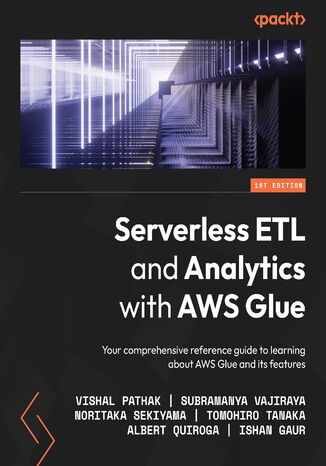
Vishal Pathak, Subramanya Vajiraya, Noritaka Sekiyama, Tomohiro...
Organizations these days have gravitated toward services such as AWS Glue that undertake undifferentiated heavy lifting and provide serverless Spark, enabling you to create and manage data lakes in a serverless fashion. This guide shows you how AWS Glue can be used to solve real-world problems along with helping you learn about data processing, data integration, and building data lakes.Beginning with AWS Glue basics, this book teaches you how to perform various aspects of data analysis such as ad hoc queries, data visualization, and real-time analysis using this service. It also provides a walk-through of CI/CD for AWS Glue and how to shift left on quality using automated regression tests. You’ll find out how data security aspects such as access control, encryption, auditing, and networking are implemented, as well as getting to grips with useful techniques such as picking the right file format, compression, partitioning, and bucketing. As you advance, you’ll discover AWS Glue features such as crawlers, Lake Formation, governed tables, lineage, DataBrew, Glue Studio, and custom connectors. The concluding chapters help you to understand various performance tuning, troubleshooting, and monitoring options.By the end of this AWS book, you’ll be able to create, manage, troubleshoot, and deploy ETL pipelines using AWS Glue.
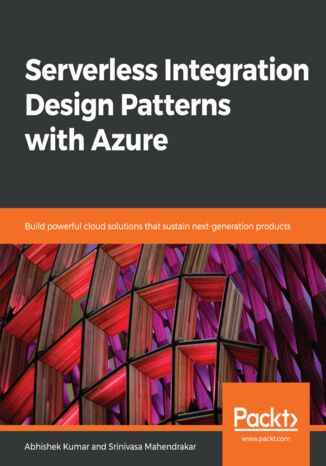
Abhishek Kumar, Srinivasa Mahendrakar
With more enterprises adapting cloud-based and API-based solutions, application integration has become more relevant and significant than ever before. Parallelly, Serverless Integration has gained popularity, as it helps agile organizations to build integration solutions quickly without having to worry about infrastructure costs. With Microsoft Azure’s serverless offerings, such as Logic Apps, Azure Functions, API Management, Azure Event Grid and Service Bus, organizations can build powerful, secure, and scalable integration solutions with ease.The primary objective of this book is to help you to understand various serverless offerings included within Azure Integration Services, taking you through the basics and industry practices and patterns. This book starts by explaining the concepts of services such as Azure Functions, Logic Apps, and Service Bus with hands-on examples and use cases. After getting to grips with the basics, you will be introduced to API Management and building B2B solutions using Logic Apps Enterprise Integration Pack.This book will help readers to understand building hybrid integration solutions and touches upon Microsoft Cognitive Services and leveraging them in modern integration solutions. Industry practices and patterns are brought to light at appropriate opportunities while explaining various concepts.
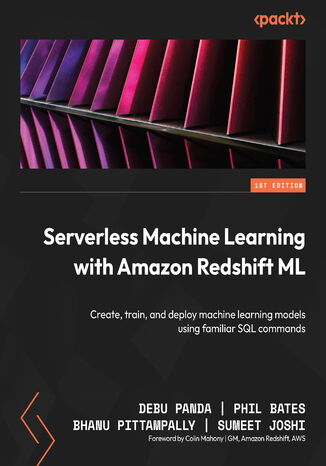
Debu Panda, Phil Bates, Bhanu Pittampally, Sumeet...
Amazon Redshift Serverless enables organizations to run petabyte-scale cloud data warehouses quickly and in a cost-effective way, enabling data science professionals to efficiently deploy cloud data warehouses and leverage easy-to-use tools to train models and run predictions. This practical guide will help developers and data professionals working with Amazon Redshift data warehouses to put their SQL knowledge to work for training and deploying machine learning models.The book begins by helping you to explore the inner workings of Redshift Serverless as well as the foundations of data analytics and types of data machine learning. With the help of step-by-step explanations of essential concepts and practical examples, you’ll then learn to build your own classification and regression models. As you advance, you’ll find out how to deploy various types of machine learning projects using familiar SQL code, before delving into Redshift ML. In the concluding chapters, you’ll discover best practices for implementing serverless architecture with Redshift.By the end of this book, you’ll be able to configure and deploy Amazon Redshift Serverless, train and deploy machine learning models using Amazon Redshift ML, and run inference queries at scale.
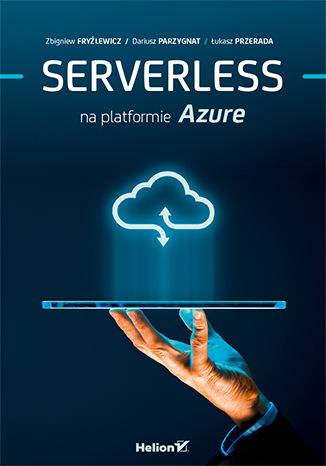
Serverless na platformie Azure
Zbigniew Fryźlewicz, Dariusz Parzygnat, Łukasz Przerada
Odkryj platformę Microsoft Azure i możliwości architektury serverless! Poznaj usługi FaaS oferowane przez platformę Azure Twórz skalowalne aplikacje w architekturze serverless Naucz się praktycznie wykorzystywać potencjał chmury Platformy chmurowe i oferowane przez nie usługi zdobyły serca całych rzesz programistów i inwestorów IT, którzy cenią sobie nie tylko ich wysoką skalowalność, niezawodność i bezpieczeństwo, lecz również stosunkowo niskie koszty, wygodę używania oraz możliwości szybkiego uruchamiania i udostępniania gotowych rozwiązań. Ostatnimi czasy szczególnie popularna jest architektura serverless, dzięki której tworzenie i wdrażanie wydajnych aplikacji sieciowych wymaga niewielkich nakładów pracy i jest możliwe w bardzo krótkim czasie. Jeśli chcesz od praktycznej strony poznać proces budowania i wdrażania aplikacji wykorzystującej usługi FaaS oferowane przez chmurę firmy Microsoft, sięgnij po książkę Serverless na platformie Azure. Bez zbędnych wstępów otworzy przed Tobą świat nowoczesnej architektury, umożliwiającej szybkie i łatwe wprowadzanie na rynek wydajnych, skalowalnych i łatwych w utrzymaniu aplikacji biznesowych. Dzięki lekturze poznasz kroki niezbędne do opracowania rozwiązania opartego na Azure Functions, realizacji przepływów za pomocą Durable Task Framework i integracji aplikacji z zewnętrznymi serwisami przy użyciu Azure Logic Apps. Dowiesz się też, jak monitorować rozwiązanie za pomocą usługi Application Insights. Zalety i ograniczenia architektury i przetwarzania serverless Tworzenie aplikacji opartej na Azure Functions Realizacja przepływów za pomocą Durable Functions Integracja z zewnętrznymi serwisami przy użyciu Azure Logic Apps Wdrożenie aplikacji za pomocą narzędzi CI/CD w ramach usługi Azure DevOps Testowanie aplikacji opartej na Azure Functions Monitorowanie rozwiązania za pomocą Application Insights Buduj, wdrażaj, oszczędzaj - pracuj wydajniej dzięki architekturze serverless!