
Verleger: 16
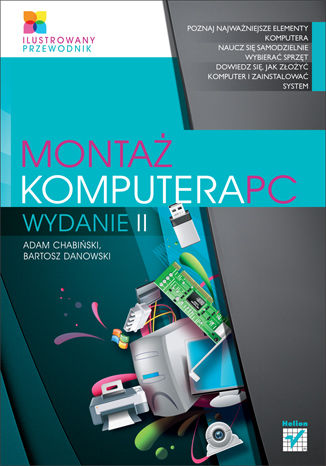
Montaż komputera PC. Ilustrowany przewodnik. Wydanie II
Adam Chabiński, Bartosz Danowski
Poznaj najważniejsze elementy komputera Naucz się samodzielnie wybierać sprzęt Dowiedz się, jak złożyć komputer i zainstalować system Nie istnieje jeden doskonały model komputera osobistego, który byłby w stanie zaspokoić niejednokrotnie bardzo odmienne potrzeby różnych użytkowników. Choć każdy chciałby mieć jak najlepszy sprzęt, innych osiągów będą spodziewali się graficy, inżynierowie czy naukowcy, a innych gracze, programiści, redaktorzy czy księgowe. Nie wszystkim potrzebne są też niezwykle wydajne i kosztujące krocie maszyny, na które starają się namówić nabywców sprzedawcy sprzętu. Nie każdy też uważa popularne ostatnio laptopy za najlepsze i najtańsze rozwiązanie. Czy jesteś zatem skazany na dyktat "mądrzejszych" od siebie sprzedawców, poszukiwanie rady u bardziej doświadczonych osób lub konieczność wyboru gotowego modelu spośród bardzo ogólnej oferty dużych firm komputerowych? Nie, ponieważ możesz skorzystać z wiedzy zawartej w książce "Montaż komputera PC. Ilustrowany przewodnik. Wydanie II" . Dzięki niej poznasz budowę współczesnych pecetów i wykorzystywane w nich technologie, a ponadto nauczysz się określać swoje potrzeby i w zależności od nich dobierać komponenty zestawu. Dowiesz się, na co należy zwracać szczególną uwagę podczas planowania zakupu komputera dostosowanego do indywidualnych potrzeb. Składanie własnego komputera od podstaw przestanie być czymś magicznym, a ustawienia BIOS-u nie będą już sprawiać problemów. Pozbędziesz się też obaw przed samodzielną rozbudową i drobnymi naprawami swojego "składaka" oraz nauczysz się instalować system operacyjny i odpowiednie sterowniki urządzeń. Podstawy architektury komputerów PC Dobór i zakup odpowiednich komponentów Niezbędne narzędzia i warsztat pracy Montaż komponentów i ich łączenie Uruchamianie sprzętu i rozwiązywanie problemów Konfiguracja ustawień BIOS-u Instalacja systemu operacyjnego i sterowników Spraw, aby samodzielne składanie komputera było dla Ciebie czystą przyjemnością!

Sven Hassel
Przetłumaczona na 25 języków i sprzedana w 53 milionach egzemplarzy odnowiona seria skandynawskich bestsellerów! Szósta część serii 27. Pułk Pancerny, częściowo opartej na autobiografii autora. To obraz straszliwej wojny ukazany z perspektywy jednostki - żołnierza, który nie walczy o ideały, lecz o przeżycie. Tym razem Porty, Stary, Sven, Barcelona i Legionista trafiają do Włoch, gdzie stoczą walkę w jednej z najbardziej znanych bitew II Wojny Światowej - pod Monte Cassino. Bohaterowie cyklu pochodzą z różnych warstw społecznych, są różnej narodowości, lecz łączy ich jedno - nadzieja na przeżycie. Wojna u Hassela to brutalne szaleństwo pozbawione celu, a okupione krwią żołnierzy - zwyczajnych ludzi. Jeżeli jesteś fanem "Na zachodzie bez zmian" Ericha Marii Remarque'a, to jest to zdecydowanie lektura dla Ciebie! Utwór ma charakter publikacji historycznej napisanej językiem charakterystycznym dla czasów, z których pochodzi. Powieść została opublikowana po raz pierwszy w 1965 roku.

Alexandre Dumas
Monte-Criston kreivi on klassinen Alexandre Dumas vanhemman kirjoittama historiallinen seikkailuromaani. Sitä pidetään usein Dumasn parhaimpiin kuuluvana teoksena ja se esiintyy usein myös kaikkien aikojen parhaimpien romaanien listoilla. Tarinan paikkana ovat Ranska, Italia ja Välimeren saaret vuosina 18141838. Seikkailuromaanin tyyliin kirjoitetun tarinan teemoja ovat oikeus, kosto, armeliaisuus ja anteeksianto.

H. Rider Haggard
Not everyone can cope with revenge. The story of a man who allows revenge to devour his life, so he misses all the blessings that God gives him on his way. It is surprising how well the plot is built and how the author managed to ensure that the story does not lose its relevance over time. Readers will plunge into the stunning world of adventure and fiction by Rider Haggard!

Maciej Torebko
Nie każdy potwór czai się w ciemnościach. Niektóre uśmiechając się, mijają cię na ulicy. W 1995 roku był nikim. Cieniem, wyrzutkiem, którego nikt nie zauważał. Ale tamtego wieczoru postanowił stać się kimś innym - bogiem. Zabił. Poczuł smak śmierci i cierpienia. I wtedy wszystko się zaczęło. Trzydzieści lat później Białystok znów drży. Przypadkowy świadek odkrywa ciało kobiety. Brutalne ślady napaści budzą najgorsze skojarzenia. Aspirant Ireneusz Suszyński, niespodziewanie przeniesiony do komendy wojewódzkiej, zostaje rzucony w wir śledztwa. Towarzyszy mu komisarz Milena Kosińską-Wrońską - ostra, zmęczona systemem, ale wciąż bezkompromisowa. Im więcej zadają pytań, tym głębiej grzęzną. Zmowa milczenia, układy z przeszłości, niewygodne nazwiska. Czy uda im się przebić mur kłamstw, które cementowały miasto przez dekady? Dokąd doprowadzi ich dochodzenie? Jaką cenę zapłacą za prawdę? "Monument" to mroczny thriller psychologiczny o winie i bezkarności. O tych, którzy krzywdzą, i tych, którzy milczą. O potworach, które nie rodzą się w ciemnościach, lecz w świetle dnia. Tuż obok nas.
Jonathan Moore, Michael Churchward
Moodle gives you the power to create and customize feature-rich plug-ins. If you can write Moodle plug-ins, you can make it do just about anything. From making the site easier to administer, to new features, to completely changing the way it looks; plug-ins are the method Moodle offers to customize and extend its functionality. This book will show you how to build all sorts of Moodle plug-ins: admin plug-ins, Blocks, Activities, Grading components, Reports, Fliters that change the way your site works and looks. You will develop standard Moodle plug-ins such as Activities, Filters, and Blocks by creating functioning code that you can execute in your own Moodle installation. Writing modular plug-ins for Moodle will be a large focus of this book.This book will take you inside Moodle and provide you with the ability to develop code the “Moodle way”.This book will expose you to all of the core code functions in Moodle, in a progressive, understandable way. You will learn what libraries are available, what the API calls are, how it is structured and how it can be expanded beyond the plug-in system.You will begin by getting an understanding of the basic architecture that Moodle uses to operate in. Next you will build your first plug-in; a block. You will carry on building other Moodle plug-ins, gaining knowledge of the “Moodle way” of coding, before plunging deeper into the API and inner libraries. Lastly, you will learn how to integrate Moodle with other systems using a variety of methods.When you have completed, you will have a solid understanding of Moodle programming and knowledge of how to extend its functionality in whatever way you want.
Paul Taylor
Educators use the Moodle web application to create effective online learning sites. Creating such learning environments that suit Design and Technology subjects requires understanding and implementation of both basic and advanced Moodle features.This book takes a detailed look at Moodle features with examples of how to fully support the Design and Technology curricula using Moodle. It will guide you to incorporate specific modules and blocks to enhance learning as well as allow detailed tracking of performance by using formative and summative assessment tools with ease.We start with setting up a very basic Moodle course for Design and Technology, and then set up some basic resources and some interactive material. You will customize your own courses and create a course for each of the key areas of the DT subjects and add material to them. We will create some basic reporting and assessment tools and enhance the look of the course. We will use Moodle's detailed and sophisticated gradebook to assess your student s ' learning progress in activities from an assignment to an offline activity. Then we will support students in designing a product or trying a new recipe in food technology in market research to find out exactly what the public wants in relation to their product, by designing a questionnaire. We will allow product design or resistant material students use the HTML features of the questionnaire module to incorporate images into the questions to make it clearer to respondents what it is they are trying to make and sell.We will allow students in construction to gather and organize their research material in a great deal of detail and also allow them to better understand their target market and the materials used in their construction through detailed questioning. We will allow food technology students to discuss and receive constructive feedback on food products that contribute to health issues that will enable them to make informed decisions and therefore better quality products. Then we explore several components within Moodle's core functionality and some third-party sources to display the progress of the student's work and development. We then have an overview of the different design portfolios available. Finally we look at additional ways to enhance the teaching and learning of D ' T with Moodle using third-party modules and add-ons.
Jeff Stanford
That word Moodle keeps cropping up all over the place ñ it's in the newspapers, on other teachers' tongues, in more and more articles. Do you want to find out more about it yourself and learn how to create all sorts of fun and useful online language activities with it? Your search ends right here.This book demystifies Moodle and provides you with answers to your queries. It helps you create engaging online language learning activities using the Moodle platform. It has suggestions and fully working examples for adapting classroom activities to the Virtual Learning Environment.This book breaks down the core components of a typical language syllabus ñ speaking, pronunciation, listening, reading, writing, vocabulary, grammar, and assessment ñ and shows you how to use Moodle 1.9 to create complete, usable activities that practise them. Each chapter starts with activities that are easier to set up and progresses to more complex ones. Nevertheless, it's a recipe book so each activity is independent. We start off with a brief introduction to Moodle so that you're ready to deal with those specific syllabus topics, and conclude with building extended activities that combine all syllabus elements, making your course attractive and effective. Building activities based on the models in this book, you will develop the confidence to set up your own Moodle site with impressive results.