
Informatyka
Stefan Kohler
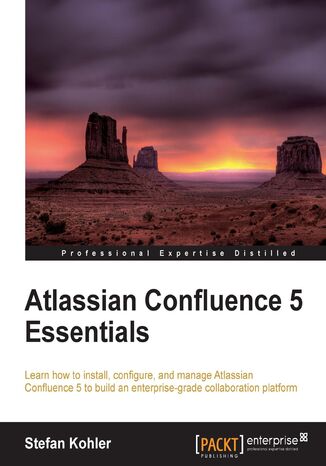
Every idea, concept, and project needs documentation, which is traditionally kept in a variety of documents on different devices. Confluence 5 centralizes that documentation and provides it in one single location, available from almost any device and location.Atlassian Confluence 5 Essentials is a practical, hands-on guide explaining not only how to install and administrate Confluence, but also everything you need to create, share, and collaborate on your documentation. This book will give you everything you need to get started with Confluence.Before you can start creating content, Confluence needs to be available. That is exactly where we start with this book; installing Confluence. Through a number of clear, practical exercises you will go from installation and administration, to creating content and involving your teammates.This book will teach you how to quickly create compelling content. You will learn how to involve your teammates in the process, using the Confluence workbox and share features. You will learn how Confluence can be customized with regards to look and feel, extra functionality, and integration with other tools, so that there is nothing in your way when you want to introduce Confluence 5 within your organisation.If you need to develop better collaboration on mission critical projects, then this book is for you!
Atlassian Jira Server & Data Center. Programowanie rozwiązań w projektach biznesowych
Jakub Kalinowski
By szybciej, sprawniej i skuteczniej zarządzać projektami Znalezienie odpowiedzi na zaprzątające umysł pytania z zakresu automatyzacji zwykle wiąże się ze spędzeniem długich godzin na wertowaniu niespójnej dokumentacji lub przeszukiwaniu forum Atlassian Community, gdzie swoimi problemami (a także autorskimi pomysłami na ich rozwiązanie) dzielą się inni użytkownicy Jiry. To jednak często bezproduktywne działanie, a jedynym skutecznym ― albo i nieskutecznym ― sposobem, by pokonać przeszkodę, jest metoda prób i błędów. W szczególności dotyczy to klas, metod i interfejsów, o których możemy jedynie powiedzieć, że istnieją i przyjmują określone typy parametrów. Książka Jakuba Kalinowskiego ma w zamyśle oszczędzić czytelnikom żmudnego procesu pozyskiwania wiedzy i dać wskazówki, jak rozwiązać konkretne problemy, z którymi mogą się oni zetknąć podczas pracy z Atlassian Jira Server. Znalazło się tu omówienie takich kwestii jak custom fields, workflows, integracje z API, funkcjonalności dostarczane przez pluginy, a także tego, co niesłusznie jest uznawane za terra incognita, czyli tworzenia własnych pluginów. Autor uzupełnił treść o kilka zagadnień związanych z integracją Jiry i Confluence, jak również z bazami Insight - Asset Management, ponieważ obie aplikacje często są obecne w projektach biznesowych, a ich automatyzacja zazwyczaj przysparza wielu problemów. To książka adresowana przede wszystkim do czytelników, którzy mają już doświadczenie w zarządzaniu projektami i instancjami Jira, jednak do tej pory nie zdecydowali się na pisanie skryptów automatyzujących.
Attracting IT Graduates to Your Business. Capture the best new IT talent for your company
An Coppens
Capture the best and brightest IT talent for your company.In the competitive IT hiring market, the best candidates are often snapped up by big companies before they even graduate, so what can you do to attract them to work for you? The new generation of IT graduates have their own values and each industry has specific recruitment techniques, and the savvy hiring manager needs to know about both in order to attract the very best graduates.In this practical guide, An Coppens gives hiring managers unique insights into the new generation of IT graduates and what helps them make their career decisions. Featuring examples of recruitment strategies that have worked for some of the great names in the IT industry such as Google and Microsoft, An translates their strategies into practical tips so you can implement them in your organisation’s recruitment process.
Paul Renard
Mixing is one of the most challenging stages of working with audio. You can write strong music, capture clean and intentional recordings, or design compelling sounds and still end up with a mix that feels flat, muddy, or unfocused. The real challenge isn’t just technical; it’s making the right creative decisions throughout the mixing process. This book tackles those challenges directly, helping you develop the mindset of a mixing engineer and avoid common pitfalls. You’ll learn how to set up a studio that fits your budget and workflow, choose practical tools and gear, and apply effective recording techniques. From early session preparation to shaping a finished mix, the book follows structured recipes that focus on deliberate mixing techniques, sound design decisions, and workflow strategies. The goal is not to chase an abstract idea of perfection, but to move consistently toward a mix that feels clear, intentional, and emotionally right for the project. By the end of this guide, you will be able to organize your sessions efficiently, shape and control sound with confidence, and refine your work into polished results that carry clarity, depth, and narrative impact.

Audyt bezpieczeństwa informacji w praktyce
Tomasz Polaczek
Rozpoczęła się era społeczeństwa informacyjnego. Działalność coraz większej liczby organizacji i firm zależy od szybkiego i efektywnego przetwarzania informacji. Informacja stała się cennym, często wykradanym towarem. Zagrożeniem dla bezpieczeństwa danych są nie tylko crackerzy, lecz często także pracownicy firmy, którzy nieświadomie udostępniają zastrzeżone informacje osobom trzecim. Upowszechnienie informacji, będących tajemnicą lub własnością intelektualną i handlową firmy lub instytucji, może oznaczać utratę reputacji, zakończenie działalności na rynku lub nawet wywołać kłopoty natury prawnej. Z tych powodów informację trzeba należycie chronić oraz odpowiednią nią zarządzać. Książka "Audyt bezpieczeństwa informacji w praktyce" przedstawia praktyczne aspekty wdrażania i realizowania polityki ochrony danych. Opisuje zarówno regulacje prawne, jak i normy ISO traktujące o bezpieczeństwie informacji. Zawiera informacje o odpowiednim zarządzaniu systemami przechowywania danych, fizycznym zabezpieczaniu miejsc, w których znajdują się nośniki danych, oraz szkoleniu użytkowników systemów. Normy ISO i PN dotyczące ochrony informacji Planowanie polityki bezpieczeństwa Umowy o zachowaniu poufności Zabezpieczanie budynku i pomieszczeń Tworzenie procedur eksploatacji sprzętu i systemów Ochrona sieci przed programami szpiegującymi Zarządzanie dostępem użytkowników do systemu Odpowiednio zaplanowane procedury ochrony danych mogą uchronić przedsiębiorstwo przed poważnymi problemami. Wykorzystaj wiadomości zawarte w tej książce i wprowadź podobne procedury w swojej firmie.
Jens Grubert
Augmented Reality offers the magical effect of blending the physical world with the virtual world, which brings applications from your screen into your hands. AR redefines advertising and gaming, as well as education. It will soon become a technology that will have to be mastered as a necessity by mobile application developers.Augmented Reality for Android Application Development enables you to implement sensor-based and computer vision-based AR applications on Android devices. You will learn about the theoretical foundations and practical details of implemented AR applications, and you will be provided with hands-on examples that will enable you to quickly develop and deploy novel AR applications on your own.Augmented Reality for Android Application Development will help you learn the basics of developing mobile AR browsers, how to integrate and animate 3D objects easily with the JMonkeyEngine, how to unleash the power of computer vision-based AR using the Vuforia AR SDK, and will teach you about popular interaction metaphors. You will get comprehensive knowledge of how to implement a wide variety of AR apps using hands-on examples.This book will make you aware of how to use the AR engine, Android layout, and overlays, and how to use ARToolkit. Finally, you will be able to apply this knowledge to make a stunning AR application.
Jonathan Linowes, Krystian Babilinski
Augmented Reality brings with it a set of challenges that are unseen and unheard of for traditional web and mobile developers. This book is your gateway to Augmented Reality development—not a theoretical showpiece for your bookshelf, but a handbook you will keep by your desk while coding and architecting your first AR app and for years to come.The book opens with an introduction to Augmented Reality, including markets, technologies, and development tools. You will begin by setting up your development machine for Android, iOS, and Windows development, learning the basics of using Unity and the Vuforia AR platform as well as the open source ARToolKit and Microsoft Mixed Reality Toolkit. You will also receive an introduction to Apple's ARKit and Google's ARCore! You will then focus on building AR applications, exploring a variety of recognition targeting methods. You will go through multiple complete projects illustrating key market sectors including business marketing, education, industrial training, and gaming. By the end of the book, you will have gained the necessary knowledge to make quality content appropriate for a range of AR devices, platforms, and intended uses.
Rui Wang
Microsoft Kinect changes the notion of user interface design. It differs from most other user input controllers as it enables users to interact with the program without touching the mouse or a trackpad. It utilizes motion sensing technology and all it needs is a real-time cameras, tracked skeletons, and gestures.Augmented Reality with Kinect will help you get into the world of Microsoft Kinect programming with the C/C++ language. The book will cover the installation, image streaming, skeleton and face tracking, multi-touch cursors and gesture emulation. Finally, you will end up with a complete Kinect-based game.Augmented Reality with Kinect will help you get into the world of Kinect programming, with a few interesting recipes and a relatively complete example. The book will introduce the following topics: the installation and initialization of Kinect applications; capturing color and depth images; obtaining skeleton and face tracking data; emulating multi-touch cursors and gestures; and developing a complete game using Kinect features.The book is divided in such a way so as to ensure that each topic is given the right amount of focus. Beginners will start from the first chapter and build up to developing their own applications.