
Big data
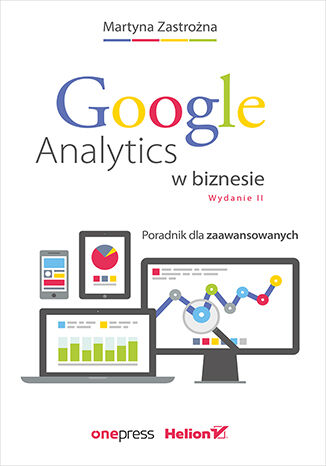
Google Analytics w biznesie. Poradnik dla zaawansowanych. Wydanie II
Martyna Zastrożna
Najważniejsze narzędzie analityczne Google? Wykorzystaj je maksymalnie. Na 120%! Google Analytics to internetowe narzędzie, które Google oferuje nieodpłatnie każdemu, kto prowadzi działalność online. Dzięki niemu możliwe jest zbieranie i analizowanie danych generowanych przez internautów poruszających się w sieci, wchodzących na stronę firmy i podejmujących za pośrednictwem jej serwisu internetowego rozmaite aktywności. Dla osoby sprawnie poruszającej się w panelu użytkownika Google Analytics stanowi przebogate źródło wiedzy o klientach firmy - ich zwyczajach, zainteresowaniach, oczekiwaniach, zachowaniach itd. Te informacje mogą być podstawą do usprawnienia obsługi klienta online, a co za tym idzie - przyczynić się do zwiększenia ruchu i sprzedaży w serwisie WWW przedsiębiorstwa. Umiejętnie zaprzęgnięty do pracy Google Analytics zapewnia przewagę rynkową. Jednak słowem kluczem jest tu „umiejętnie”. Nie wystarczy bowiem podpiąć firmowy serwis pod panel analityczny i od czasu do czasu logować się do „analityksów”. Trzeba się nauczyć czytać zbierane przez Google dane, eksportować je i zestawiać w sposób, który będzie najlepiej odpowiadał potrzebom i celom biznesowym firmy. Jak pisze autorka, z Google Analytics - zwłaszcza w jego nowej odsłonie - da się wyciągnąć 120% możliwości! Jak to zrobić? Tego się dowiesz z tej książki, w drugim wydaniu pogłębionej o wiedzę dotyczącą wizualizacji danych w Google Data Studio, a także pracy z danymi wyeksportowanymi do BigQuery.
Arvind Ravulavaru
Cognitive services are the new way of adding intelligence to applications and services. Now we can use Artificial Intelligence as a service that can be consumed by any application or other service, to add smartness and make the end result more practical and useful.Google Cloud AI enables you to consume Artificial Intelligence within your applications, from a REST API. Text, video and speech analysis are among the powerful machine learning features that can be used. This book is the easiest way to get started with the Google Cloud AI services suite and open up the world of smarter applications.This book will help you build a Smart Exchange, a forum application that will let you upload videos, images and perform text to speech conversions and translation services. You will use the power of Google Cloud AI Services to make our simple forum application smart by validating the images, videos, and text provided by users to Google Cloud AI Services and make sure the content which is uploaded follows the forum standards, without a human curator involvement.You will learn how to work with the Vision API, Video Intelligence API, Speech Recognition API, Cloud Language Process, and Cloud Translation API services to make your application smarter.By the end of this book, you will have a strong understanding of working with Google Cloud AI Services, and be well on the way to building smarter applications.
Kieran Kavanagh, Priyanka Vergadia
Most companies today are incorporating AI/ML into their businesses. Building and running apps utilizing AI/ML effectively is tough. This book, authored by a principal architect with about two decades of industry experience, who has led cross-functional teams to design, plan, implement, and govern enterprise cloud strategies, shows you exactly how to design and run AI/ML workloads successfully using years of experience from some of the world’s leading tech companies.You’ll get a clear understanding of essential fundamental AI/ML concepts, before moving on to complex topics with the help of examples and hands-on activities. This will help you explore advanced, cutting-edge AI/ML applications that address real-world use cases in today’s market. You’ll recognize the common challenges that companies face when implementing AI/ML workloads, and discover industry-proven best practices to overcome these. The chapters also teach you about the vast AI/ML landscape on Google Cloud and how to implement all the steps needed in a typical AI/ML project. You’ll use services such as BigQuery to prepare data; Vertex AI to train, deploy, monitor, and scale models in production; as well as MLOps to automate the entire process.By the end of this book, you will be able to unlock the full potential of Google Cloud's AI/ML offerings.
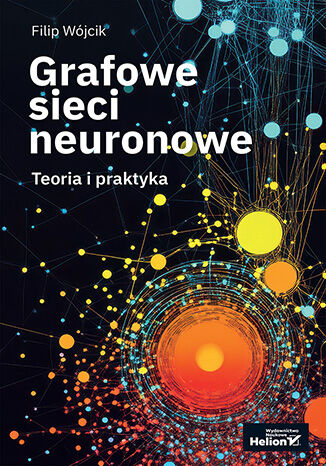
Grafowe sieci neuronowe. Teoria i praktyka
Filip Wójcik
Cicha rewolucja, która nadeszła Grafowe sieci neuronowe (ang. graph neural networks, GNN) to klasa modeli uczenia głębokiego przeznaczona do analizy danych o strukturze grafowej. W początkowym okresie ich rozwój ograniczał brak efektywnych metod projektowania i optymalizacji; w ostatnich latach bariery te w dużej mierze zostały pokonane, co przełożyło się na dynamiczny postęp teorii i praktyki. Modele GNN znajdują zastosowanie między innymi w analizie sieci społecznościowych, optymalizacji procesów logistycznych, marketingu i pracy z bazami wiedzy. Ta książka zawiera kompleksowe opracowanie tematyki sieci grafowych w kontekście uczenia maszynowego. Tym samym wypełnia istotną lukę na polskim rynku wydawniczym, oferując połączenie solidnych podstaw teoretycznych z praktycznym zastosowaniem GNN. To przewodnik, który systematycznie przeprowadza przez kolejne zagadnienia związane z sieciami grafowymi: od narzędzi klasycznej analizy grafów w środowisku Pythona i wybranych zagadnień teorii grafów przez wprowadzenie do grafowych sieci neuronowych, a także przegląd wybranych warstw splotu grafowego i dobrych praktyk ich projektowania po zagadnienia związane ze szkoleniem sieci GNN i praktyczne przykłady ich zastosowań
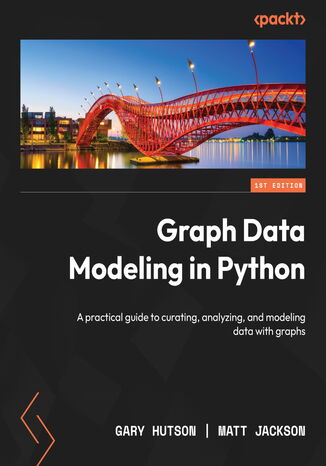
Gary Hutson, Matt Jackson
Graphs have become increasingly integral to powering the products and services we use in our daily lives, driving social media, online shopping recommendations, and even fraud detection. With this book, you’ll see how a good graph data model can help enhance efficiency and unlock hidden insights through complex network analysis.Graph Data Modeling in Python will guide you through designing, implementing, and harnessing a variety of graph data models using the popular open source Python libraries NetworkX and igraph. Following practical use cases and examples, you’ll find out how to design optimal graph models capable of supporting a wide range of queries and features. Moreover, you’ll seamlessly transition from traditional relational databases and tabular data to the dynamic world of graph data structures that allow powerful, path-based analyses. As well as learning how to manage a persistent graph database using Neo4j, you’ll also get to grips with adapting your network model to evolving data requirements.By the end of this book, you’ll be able to transform tabular data into powerful graph data models. In essence, you’ll build your knowledge from beginner to advanced-level practitioner in no time.
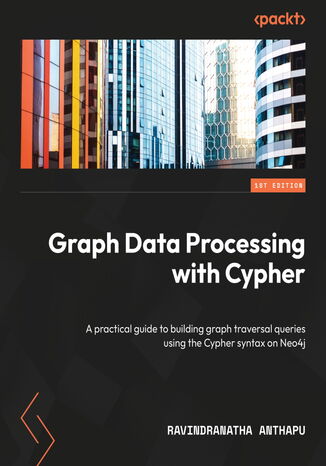
Ravindranatha Anthapu
While it is easy to learn and understand the Cypher declarative language for querying graph databases, it can be very difficult to master it. As graph databases are becoming more mainstream, there is a dearth of content and guidance for developers to leverage database capabilities fully. This book fills the information gap by describing graph traversal patterns in a simple and readable way.This book provides a guided tour of Cypher from understanding the syntax, building a graph data model, and loading the data into graphs to building queries and profiling the queries for best performance. It introduces APOC utilities that can augment Cypher queries to build complex queries. You’ll also be introduced to visualization tools such as Bloom to get the most out of the graph when presenting the results to the end users.After having worked through this book, you’ll have become a seasoned Cypher query developer with a good understanding of the query language and how to use it for the best performance.
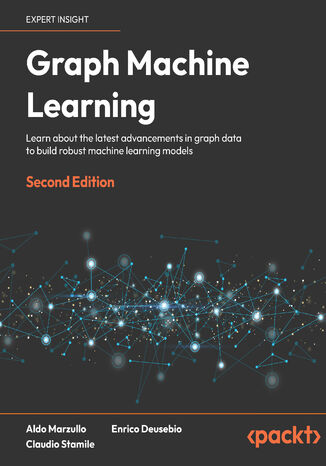
Aldo Marzullo, Enrico Deusebio, Claudio Stamile
Graph Machine Learning, Second Edition builds on its predecessor’s success, delivering the latest tools and techniques for this rapidly evolving field. From basic graph theory to advanced ML models, you’ll learn how to represent data as graphs to uncover hidden patterns and relationships, with practical implementation emphasized through refreshed code examples. This thoroughly updated edition replaces outdated examples with modern alternatives such as PyTorch and DGL, available on GitHub to support enhanced learning.The book also introduces new chapters on large language models and temporal graph learning, along with deeper insights into modern graph ML frameworks. Rather than serving as a step-by-step tutorial, it focuses on equipping you with fundamental problem-solving approaches that remain valuable even as specific technologies evolve. You will have a clear framework for assessing and selecting the right tools.By the end of this book, you’ll gain both a solid understanding of graph machine learning theory and the skills to apply it to real-world challenges.*Email sign-up and proof of purchase required -
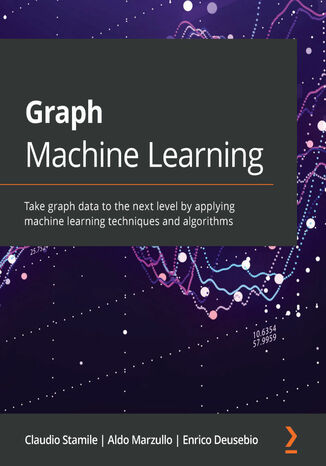
Claudio Stamile, Aldo Marzullo, Enrico Deusebio
Graph Machine Learning will introduce you to a set of tools used for processing network data and leveraging the power of the relation between entities that can be used for predictive, modeling, and analytics tasks. The first chapters will introduce you to graph theory and graph machine learning, as well as the scope of their potential use. You’ll then learn all you need to know about the main machine learning models for graph representation learning: their purpose, how they work, and how they can be implemented in a wide range of supervised and unsupervised learning applications. You'll build a complete machine learning pipeline, including data processing, model training, and prediction in order to exploit the full potential of graph data. After covering the basics, you’ll be taken through real-world scenarios such as extracting data from social networks, text analytics, and natural language processing (NLP) using graphs and financial transaction systems on graphs. You’ll also learn how to build and scale out data-driven applications for graph analytics to store, query, and process network information, and explore the latest trends on graphs. By the end of this machine learning book, you will have learned essential concepts of graph theory and all the algorithms and techniques used to build successful machine learning applications.