
Programowanie gier
John P. Doran
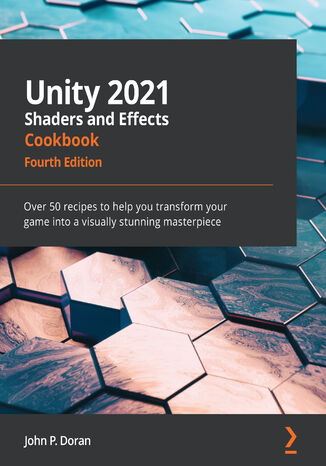
Shaders enable you to create powerful visuals for your game projects. However, creating shaders for your games can be notoriously challenging with various factors such as complex mathematics standing in the way of attaining the level of realism you crave for your shaders.The Unity 2021 Shaders and Effects Cookbook helps you overcome that with a recipe-based approach to creating shaders using Unity. This fourth edition is updated and enhanced using Unity 2021 features and tools covering Unity's new way of creating particle effects with the VFX Graph. You'll learn how to use VFX Graph for advanced shader development. The book also features updated recipes for using Shader Graph to create 2D and 3D elements. You'll cover everything you need to know about vectors, how they can be used to construct lighting, and how to use textures to create complex effects without the heavy math. You'll also understand how to use the visual-based Shader Graph for creating shaders without any code.By the end of this Unity book, you'll have developed a set of shaders that you can use in your Unity 3D games and be able to accomplish new effects and address the performance needs of your Unity game development projects. So, let's get started!
Scott H. Cameron, Edward Falzon
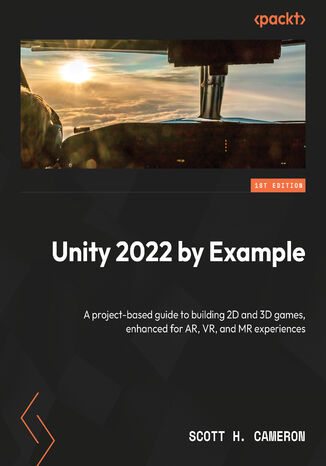
Unity 2022 by Example is a complete introduction to building games in Unity following a project-based approach. You’ll be introduced to the Unity game engine and the tools available for building and customizing a game exactly the way you want it, while maintaining a good code foundation to build upon.Once you get to grips with the fundamentals of Unity game development, you'll start creating a 2D collection game and an adventure game, followed by a 3D first person shooter game. Next, you’ll explore advanced topics, such as using machine learning to create AI-based enemy behavior, virtual reality for extending the first-person game, and augmented reality for developing a farming simulation game in a real-world setting. The book will help you gain hands-on knowledge of these topics as you build projects using the latest game tool kits. You'll also learn how to commercialize your game by publishing it to a distribution platform and maintain and support it throughout its lifespan. As you progress, you’ll gain real-world knowledge and experience by taking your games from conceptual design to completion.By the end of this Unity book, you’ll have strong foundational knowledge of how to structure a Unity project that is both maintainable and extensible for commercially released games.
Anthony Davis, Travis Baptiste, Russell Craig, Ryan...
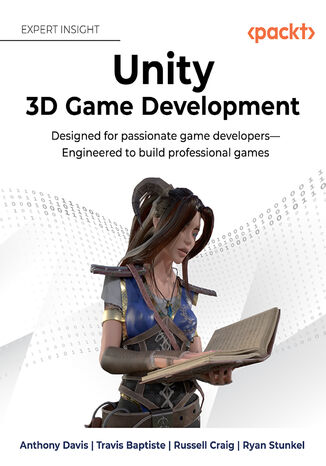
This book, written by a team of experts at Unity Technologies, follows an informal, demystifying approach to the world of game development.Within Unity 3D Game Development, you will learn to:Design and build 3D characters and game environmentsThink about the users’ interactions with your gameDevelop an interface and apply visual effects to add an emotional connection to your world Gain a solid foundation of sound design, animations, and lighting Build, test, and add final touchesThe book contains expert insights that you’ll read before you look into the project on GitHub to understand all the underpinnings. This way, you get to see the end result, and you’re allowed to be creative and give your own thoughts to design, as well as work through the process with the new tools we introduce.Join the book community on Discord to read this book with Unity game developers, and the team of authors. Ask questions, build teams, chat with the authors, participate in events and much more. The link to join is included in the book.
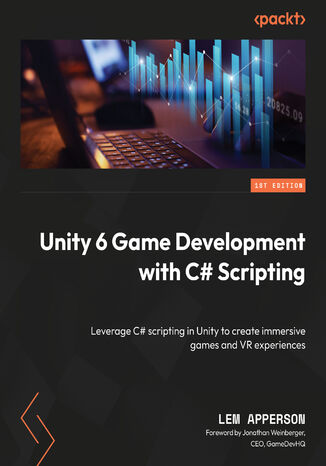
Lem Apperson, Jonathan Weinberger
As developers tackle the growing complexity of creating immersive, high-performance games, the need for robust and efficient scripting continues to increase. Written by a game developer and Unity/C# expert known for his Apple App Store titles and extensive certifications, this book will help both new and seasoned developers overcome this challenge by helping you build a solid foundation in C# scripting within Unity and navigate the increasing demands of real-time game development.You’ll explore Unity-specific strategies for creating engaging user interfaces, vital in today's dynamic gaming landscape. The chapters walk you through Unity-specific classes and methods, empowering you to create diverse gaming experiences in both 3D and 2D environments. You’ll also manage complex developmental aspects, including AI, multiplayer setups, and VR integration, which are becoming increasingly relevant in the evolving gaming industry. The book serves as an invaluable resource for troubleshooting, offering techniques for debugging C# scripts and optimizing game performance—essential for crafting smooth and immersive gaming experiences.By the end of this book, you’ll be able to create both simple and complex games in Unity, opening doors to careers in game development and interactive media design.
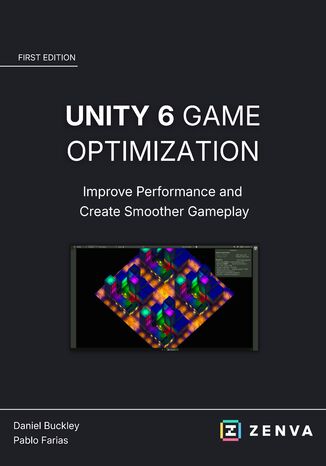
Unity 6 Game Optimization. Improve Performance and Create Smoother Gameplay
Zenva Academy
Reliable optimization starts with evidence rather than guesswork. The opening material shows how common Unity problems affect frame rate, then establishes a baseline and uses the Profiler and Frame Debugger to reveal where processing and rendering time are being spent in Unity 6.3 LTS.Readers then address the bottlenecks that matter. Static batching reduces draw calls, lighting work compares real-time and baked options, and Level of Detail and occlusion culling prevent unnecessary rendering. Every change is tied back to measurement so improvements can be confirmed instead of assumed.By the end of this guide, readers can move from diagnosis through implementation and validation in a repeatable optimization workflow. A hands-on challenge, complete Unity project files, and full C# source code provide a practical foundation for improving performance in their own games.
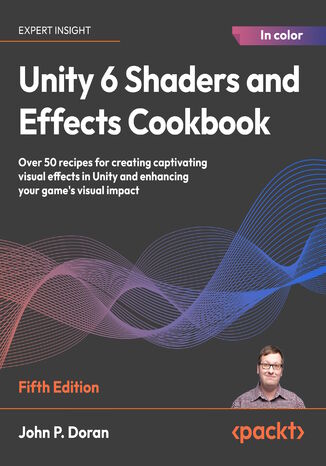
John P. Doran
Shaders enable game developers to craft visually stunning experiences, but their complexity and mathematical and technical challenges make it hard to achieve the desired level of realism. Written by a top-selling author with extensive hands-on expertise in game development, this latest edition is your indispensable guide to mastering the art of shaders within this evolving landscape.Through meticulously curated recipes, this book takes a practical approach to equip you with the knowledge and tools necessary to elevate your game visuals to unmatched sophistication. In this updated edition, you’ll gain invaluable insights into leveraging Unity’s latest tools, including Unity Muse for advanced AI-powered texture creation. From fully grasping Shader Graph to harnessing the power of vectors and textures, this Unity cookbook covers all the aspects of shader development without the need for elaborate mathematical calculations. You'll also discover practical techniques for achieving stunning visual effects with ease when creating 2D or 3D elements.
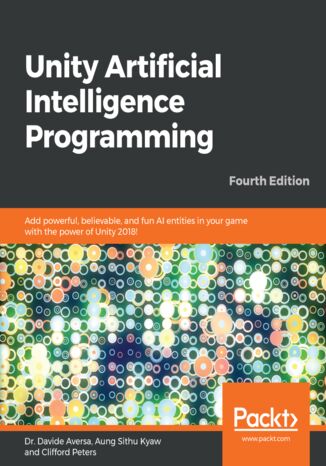
Dr. Davide Aversa, Aung Sithu Kyaw, Clifford...
Developing Artificial Intelligence (AI) for game characters in Unity 2018 has never been easier. Unity provides game and app developers with a variety of tools to implement AI, from the basic techniques to cutting-edge machine learning-powered agents. Leveraging these tools via Unity's API or built-in features allows limitless possibilities when it comes to creating your game's worlds and characters.This fourth edition with Unity will help you break down AI into simple concepts to give you a fundamental understanding of the topic to build upon. Using a variety of examples, the book then takes those concepts and walks you through actual implementations designed to highlight key concepts and features related to game AI in Unity.Further on, you'll learn how to distinguish the state machine pattern and implement one of your own. This is followed by learning how to implement a basic sensory system for your AI agent and coupling it with a Finite State Machine (FSM).Next, you'll learn how to use Unity's built-in NavMesh feature and implement your own A* pathfinding system. You'll then learn how to implement simple ?ocks and crowd dynamics, which are key AI concepts in Unity. Moving on, you'll learn how to implement a behavior tree through a game-focused example. Lastly, you'll apply all the concepts in the book to build a popular game.